
A Critical Examination of Where Circularity Fails — and What Comes Next
By Canon Otto
Convener, Global Sustainability Summit
Founder, CleanCyclers
Contributor, SustainabilityUnscripted
For more than a decade, the circular economy has been presented as sustainability’s silver bullet.
Recycle more.
Recover value.
Close the loop.
These ideas matter. They have shifted global conversations and influenced policy, finance, and corporate behaviour. But as circularity scales, an uncomfortable truth is emerging—recycling alone cannot fix a broken system.
This is not an argument against the circular economy.
It is a call to grow it up.
The Promise — and the Problem — of Circularity
At its core, the circular economy challenges the wastefulness of linear “take–make–dispose” models. It asks us to keep materials in use longer and extract more value from what we already produce.
That promise is powerful.
But in practice, circularity is increasingly treated as a technical solution to what is fundamentally a systemic problem.
Recycling focuses on outputs.
Sustainability failures begin at inputs.
At the Global Sustainability Summit, one pattern keeps surfacing: we are recycling more than ever—yet waste volumes, emissions, and ecological stress continue to rise.
That is not a failure of effort.
It is a failure of scope.
Recycling Treats Symptoms, Not Root Causes
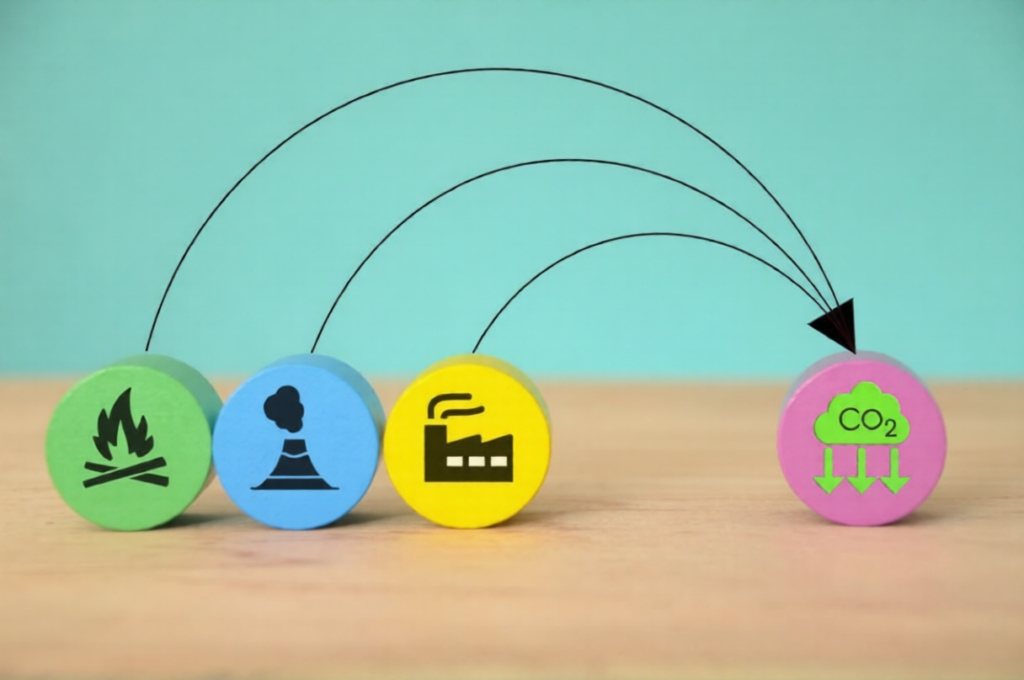
Recycling intervenes after materials have already been designed, consumed, and discarded. By then, most environmental and social damage has already occurred.
Circularity struggles when:
- Products are poorly designed for reuse or recovery
- Materials are toxic, mixed, or low-value
- Consumption continues to accelerate unchecked
- Informal workers are excluded from value chains
- Waste systems lack infrastructure, data, and financing
In these conditions, recycling becomes damage control, not transformation.
Through conversations on SustainabilityUnscripted, this tension is clear: circularity is being asked to compensate for unsustainable production and consumption patterns it was never designed to fix.
The Illusion of “Recyclable”

One of the most dangerous myths in sustainability is the word recyclable.
A product can be theoretically recyclable and still:
- End up in rivers
- Be burned or landfilled
- Pollute water systems
- Undermine informal livelihoods
Recyclability without collection, sorting, markets, and governance is meaningless.
At CleanCyclers, this reality is unavoidable. Circular systems only work when infrastructure, incentives, and social realities align. Otherwise, recycling becomes a comforting narrative that allows business-as-usual to continue.
Circular Economy ≠ Reduced Consumption
Perhaps the most uncomfortable limit of circularity is this: it does not automatically reduce consumption.
In some cases, it enables more of it.
If circularity is framed as a license to consume without consequence—“it’s fine, it will be recycled”—then it quietly reinforces the very behaviours sustainability seeks to change.
True sustainability requires:
- Less waste, not just better waste
- Fewer materials, not just recycled ones
- Longevity, repair, and sufficiency
- Cultural shifts, not only technical fixes
Circularity must be paired with restraint, not just recovery.
Where Circularity Still Matters — Deeply
None of this diminishes the importance of the circular economy.
On the contrary, it clarifies where it is most powerful.
Circularity works best when it is:
- Embedded at the design stage
- Linked to local livelihoods and jobs
- Integrated into urban resilience and flood prevention
- Supported by policy and enforcement
- Measured by real outcomes, not claims
This is where creativity turns waste into opportunity—not as branding, but as system redesign.
At CleanCyclers, circularity is treated as a means, not an end. It is one tool within a broader sustainability framework that includes governance, equity, infrastructure, and behavioural change.
What Comes Next: Beyond Recycling
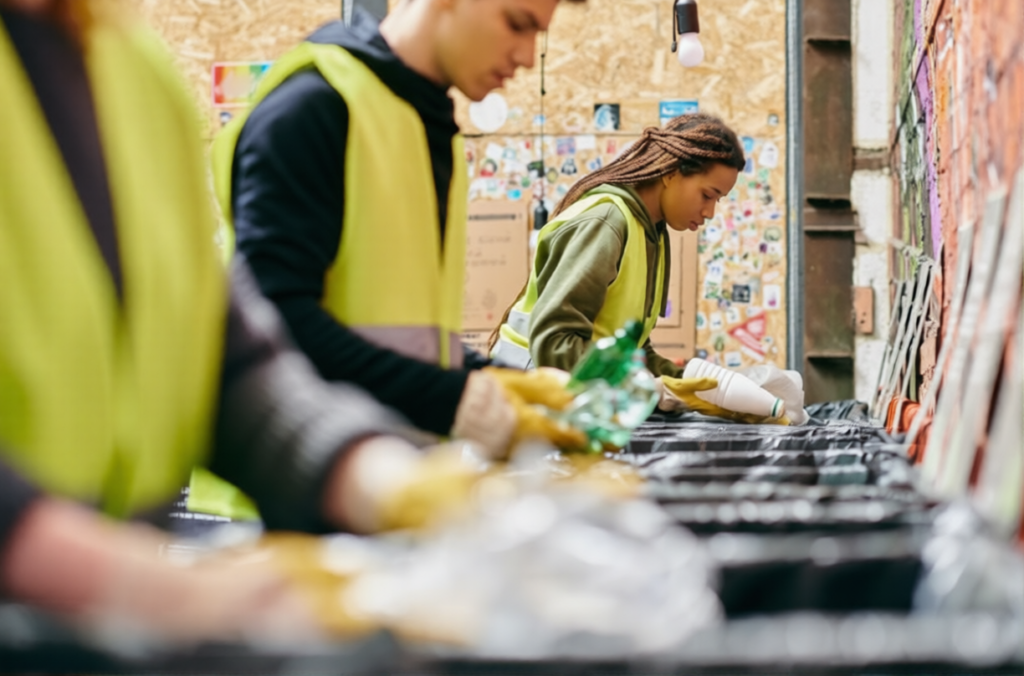
If recycling is not enough, what must come next?
The next phase of sustainability will be defined by:
- Material reduction, not just recovery
- Design accountability, not downstream fixes
- Systems thinking, not isolated interventions
- Social inclusion, not extractive green growth
- Honest metrics, not aspirational language
This evolution is already visible in the conversations shaping the Global Sustainability Summit and the editorial direction of SustainabilityUnscripted.
The future belongs to approaches that admit limits—and design beyond them.
A Final Reflection
Recycling matters.
Circularity matters.
But they are not substitutes for transformation.
Sustainability will fail if it relies on end-of-pipe solutions to correct upstream excess. It will succeed only when we confront the deeper question:
What should we stop producing, not just recycle better?
Through CanonOtto, CleanCyclers, and SustainabilityUnscripted, the position remains clear:
The circular economy is not the destination.
It is a bridge.
What matters is where that bridge leads—and whether we are brave enough to cross it.