Why the Public No Longer Trusts Corporate Sustainability Claims
By Canon Otto
Convener, Global Sustainability Summit
Founder, CleanCyclers
Contributor, SustainabilityUnscripted
Sustainability has become one of the most powerful words in modern business.
It appears in corporate mission statements, annual reports, marketing campaigns, and investor briefings. Companies promise net-zero futures, climate responsibility, ethical sourcing, and circular innovation. The language of sustainability now dominates boardrooms across the world.
And yet, something important is happening beneath the surface.
People are beginning to stop believing it.
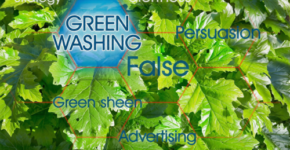
What we are witnessing today is a growing phenomenon that could reshape the credibility of the entire sustainability movement: greenwashing fatigue.
When Sustainability Becomes a Marketing Strategy

In the early years of corporate sustainability, environmental commitments were rare. Companies that invested in responsible practices were often pioneers, and the public responded with trust and enthusiasm.
But as sustainability became commercially valuable, something shifted.
Environmental responsibility slowly moved from operational strategy to marketing strategy. Sustainability narratives began appearing faster than measurable environmental improvements. Companies discovered that it was often easier to communicate sustainability than to implement it.
Today, consumers are surrounded by sustainability claims:
- “Eco-friendly products”
- “Carbon-neutral operations”
- “Responsible supply chains”
- “Net-zero commitments”
The problem is not the language itself. The problem is the gap between the language and the reality.
At SustainabilityUnscripted, conversations increasingly return to this issue: when sustainability messaging expands faster than sustainability action, credibility begins to erode.
The Growing Gap Between ESG Narratives and Real Impact
Environmental, Social, and Governance (ESG) frameworks were designed to bring transparency and accountability to corporate sustainability. In theory, they provide structured ways to measure environmental performance and social responsibility.
In practice, however, ESG has sometimes created a new challenge.
Many organisations have become extremely good at reporting sustainability without necessarily delivering it. Reports grow longer, metrics become more complex, and disclosures multiply—yet the real-world environmental outcomes often remain difficult to verify.
For the public, this creates confusion.
When every company claims to be sustainable, the word itself begins to lose meaning.
Through the lens of CanonOtto, the concern is simple: sustainability cannot survive as a concept if it becomes indistinguishable from advertising.
The Consumer Trust Collapse
Trust is the most fragile resource in the sustainability economy.
Consumers today are more informed than ever before. Investigative journalism, independent research, and social media scrutiny have exposed numerous cases where corporate environmental claims did not match operational reality.
The consequences are becoming visible:
- Consumers questioning “green” labels
- Investors demanding stronger disclosure standards
- Regulators tightening sustainability advertising rules
- Public skepticism toward corporate climate commitments
This is the essence of greenwashing fatigue. It is not merely anger at misleading claims—it is exhaustion with sustainability messaging that repeatedly overpromises and underdelivers.
At the Global Sustainability Summit, this issue has become increasingly central. If trust continues to decline, even legitimate sustainability leaders risk being treated with suspicion.
When Greenwashing Harms the Entire Movement
One of the most damaging effects of greenwashing is that it does not only harm the companies responsible for it. It undermines the credibility of the entire sustainability ecosystem.
When exaggerated claims dominate the conversation, organisations doing genuine sustainability work struggle to distinguish themselves. Authentic progress becomes harder to communicate because audiences assume all claims are marketing.
At CleanCyclers, this tension is deeply familiar.
Circular economy work often happens far from corporate advertising campaigns—in waste systems, recycling infrastructure, and community-level interventions. These systems require long-term investment, operational discipline, and local collaboration.
They rarely produce instant headlines.
But this is where sustainability actually lives: in systems that continue functioning long after the campaign ends.
Regulation Is Beginning to Respond

Governments and regulators are increasingly aware of the risks associated with unchecked sustainability claims.
Around the world, new policies are emerging to address greenwashing:
- Stricter environmental advertising standards
- Mandatory climate disclosure frameworks
- Verification requirements for net-zero claims
- Greater scrutiny of carbon offset use
These measures represent an important shift. Sustainability claims are slowly moving from voluntary messaging to regulated accountability.
Yet regulation alone cannot solve the credibility crisis. The deeper issue is cultural.
Businesses must begin treating sustainability not as a communication strategy but as an operational transformation.
Redefining What Sustainability Leadership Means
The future of sustainability leadership will not belong to the companies that speak the loudest. It will belong to those that prove impact consistently over time.
This requires a shift in priorities:
- Less emphasis on branding, more emphasis on systems
- Less focus on pledges, more focus on implementation
- Less marketing language, more measurable outcomes
At SustainabilityUnscripted, these conversations are essential because sustainability must remain intellectually honest if it is to remain effective.
And through CleanCyclers, the lesson remains clear: environmental progress is not built through declarations—it is built through infrastructure, accountability, and persistence.
A Final Reflection

Greenwashing fatigue is not a rejection of sustainability.
It is a demand for authenticity.
People are not tired of environmental responsibility. They are tired of hearing about it without seeing it. The sustainability movement now faces a critical test: whether it can move beyond messaging and rebuild credibility through action.
Through CanonOtto, CleanCyclers, and SustainabilityUnscripted, one principle remains constant:
Sustainability must be measured by what systems change—not by what campaigns say.
And in the long run, credibility will belong to those who quietly do the work.