How Cities Are Quietly Redesigning for a Displaced Climate Future
By Amb. Canon Otto
Convener, Global Sustainability Summit
Contributor, SustainabilityUnscripted
Climate migration is no longer a future scenario.
It is a present-day urban reality.
Across the world, cities are absorbing people displaced not by war or politics alone, but by floods, droughts, heat stress, coastal erosion, and failing ecosystems. Some arrive gradually. Others arrive overnight. Most arrive without headlines.
What is emerging—quietly, unevenly, but decisively—is a new kind of city:
the climate migration city.
These are urban centres reshaping housing, infrastructure, services, and systems to respond to climate-driven human movement—often without formal recognition, dedicated funding, or global frameworks to guide them.
Climate Migration Is Urbanising the Crisis
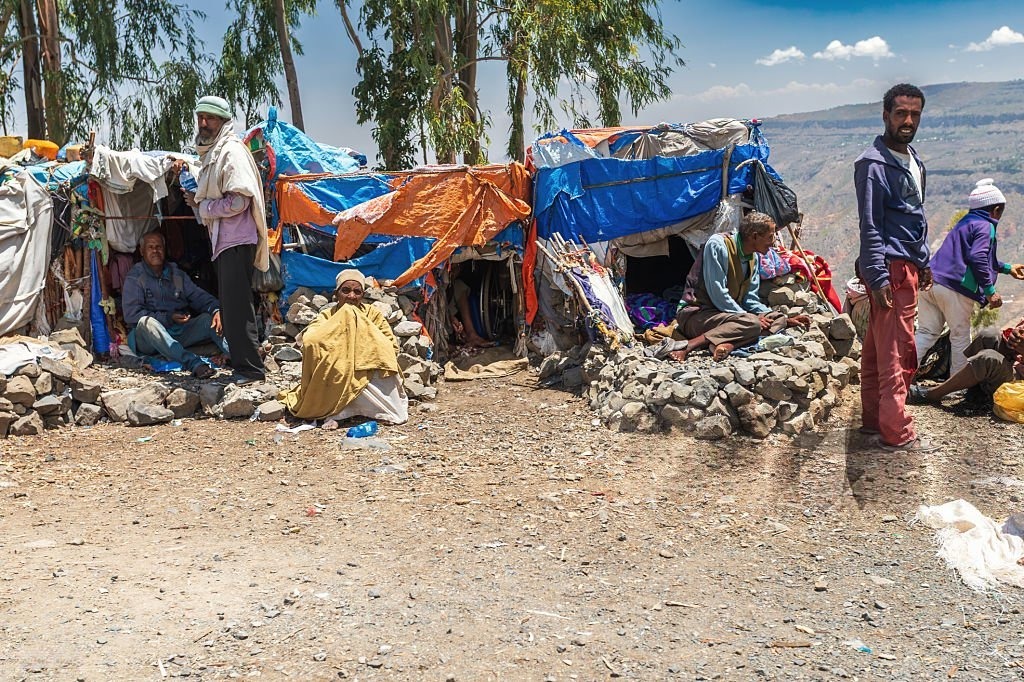
Climate displacement is frequently framed as a humanitarian issue. But in reality, it is increasingly an urban planning challenge.
Displaced populations rarely remain in camps. They move to cities—seeking work, safety, education, and services. This puts pressure on:
- Housing supply
- Transport networks
- Waste and sanitation systems
- Energy demand
- Informal economies
- Social cohesion
Cities in Africa, Asia, Latin America, and coastal regions globally are already adapting—not because they planned to, but because they must.
At the Global Sustainability Summit, this trend has become impossible to ignore: the climate crisis is becoming an urban migration crisis, and cities are now the frontline institutions responding to it.
Adaptation by Design—or by Default
Most climate migration cities did not set out to become models of adaptation. Their redesign is often incremental, improvised, and under-resourced.
Yet innovation is happening.
Housing is becoming denser and more flexible. Informal settlements are being upgraded instead of demolished. Transport routes are extending into new peri-urban zones. Social services are being decentralised.
In many cases, waste systems reveal the fault lines first.
Unplanned population growth overwhelms waste collection, worsens flooding, contaminates water, and increases disease risk. When waste is ignored, vulnerability multiplies.
This is where CleanCyclers becomes especially relevant—not as a waste company alone, but as a systems actor.
CleanCyclers and the Infrastructure of Belonging
At CleanCyclers, we work with the understanding that infrastructure is not neutral. It determines who is protected, who is exposed, and who belongs.
In climate migration cities:
- Poor waste management amplifies flood damage
- Linear systems collapse under sudden demand
- Informal communities are excluded from basic services
But circular, inclusive systems can do the opposite.
Well-designed waste and material recovery systems:
- Reduce flood risk
- Create livelihoods for displaced populations
- Improve public health
- Stabilise rapidly growing neighbourhoods
This is where creativity turns waste into opportunity—not as rhetoric, but as practical urban adaptation.
The Politics of Who Gets Designed For
One of the most uncomfortable truths about climate migration is that displacement often outpaces political recognition.
Climate migrants are frequently labelled as “temporary,” “informal,” or “illegal,” even when their displacement is permanent. This delays investment and excludes them from formal planning processes.
But cities that wait for national or global consensus are already falling behind.
Through conversations on SustainabilityUnscripted, we return to this reality repeatedly: cities are becoming climate actors by necessity, not mandate.
The cities that succeed will be those that:
- Design infrastructure for reality, not status
- Plan for permanence, not return
- Include displaced communities as co-builders, not burdens
Climate Migration Cities Are Not a Failure
There is a dangerous narrative that climate migration represents policy failure. In truth, movement is a rational human response to environmental stress.
The failure lies not in migration—but in systems that refuse to adapt.
Cities that recognise this are shifting from crisis response to adaptive urbanism:
- Flexible zoning
- Modular housing
- Distributed services
- Circular waste and water systems
- Community-led planning
This is adaptation evolving into governance.
Why the World Must Pay Attention
Climate migration cities are previews of a future most regions will eventually face. Sea-level rise, heat stress, water scarcity, and food insecurity will not remain regional issues.
Urban planners, investors, and policymakers who ignore this reality are planning for a world that no longer exists.
At the Global Sustainability Summit, one conclusion is increasingly clear: climate resilience will be judged city by city.
From Emergency to Opportunity
If designed poorly, climate migration cities become sites of tension, inequality, and instability.
If designed creatively, they can become:
- Engines of circular economies
- Laboratories of inclusive infrastructure
- Models of climate-resilient urban growth
At CleanCyclers, and through SustainabilityUnscripted, the argument is consistent: waste, displacement, and vulnerability are not endpoints—they are design challenges.
And design, when guided by justice and creativity, can turn pressure into progress.
A City Is a Choice
Climate migration is reshaping the urban century.
The question is not whether cities will absorb displaced populations—they already are.
The question is whether they will do so through neglect and reaction, or through intentional design and systems thinking.
The rise of climate migration cities tells us something profound:
the future of sustainability will not be decided only in climate negotiations, but in neighbourhoods, waste systems, housing blocks, and transport corridors.
Cities are choosing—quietly, imperfectly, but decisively—what kind of future they will build.
Through Canon Otto, CleanCyclers, and SustainabilityUnscripted, that choice remains clear:
Design for dignity.
Build for reality.
And treat climate migration not as a threat—but as a test of our collective imagination.