By Amb. Canon Otto | SustainabilityUnscripted
Carbon markets were introduced with a compelling promise:
Reduce emissions efficiently by assigning economic value to carbon reduction.
In theory, it is elegant.
Polluters can offset emissions.
Projects that reduce or remove carbon can generate credits.
Markets create incentives for climate action.
At least, that is the idea.
But at SustainabilityUnscripted, we must ask a harder question:
Are carbon markets functioning as climate solutions—or evolving into a financial system increasingly detached from environmental reality?
Because beneath the growth of carbon trading lies a growing concern:
The carbon market may be carrying bubble-like characteristics.
And if left unchecked, the consequences could extend far beyond finance.
They could undermine trust in climate action itself.
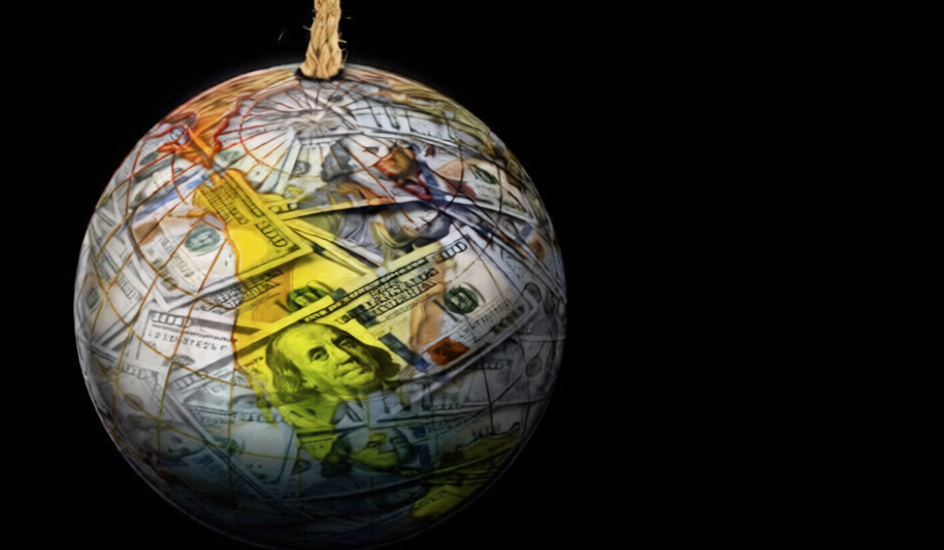
The Rise of Carbon as a Financial Asset

Carbon credits were originally positioned as environmental instruments.
But over time, they have increasingly become financial assets.
Organizations now purchase credits to:
- Offset emissions
- Meet net-zero targets
- Satisfy ESG expectations
- Manage reputational risk
This has expanded demand rapidly.
As demand grows, so does market participation:
- Brokers
- Traders
- Developers
- Financial intermediaries
This financialization has accelerated the growth of carbon markets globally.
But financial growth does not automatically mean environmental integrity.
At SustainabilityUnscripted, this distinction is critical.
A growing market is not necessarily a functioning solution.
The Over-Crediting Problem
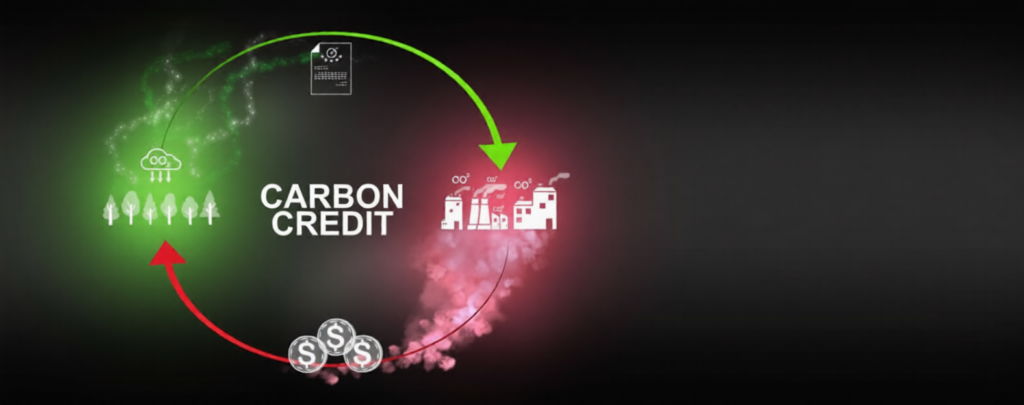
One of the most significant risks in the carbon market is over-crediting.
This occurs when projects generate more carbon credits than the real emissions reductions or removals they achieve.
In simple terms:
More climate benefit is being claimed than actually delivered.
This can happen due to:
- Weak baseline assumptions
- Inflated project impact projections
- Poor monitoring methodologies
- Verification inconsistencies
The result is a dangerous distortion.
Companies may believe they are offsetting emissions effectively—
While atmospheric outcomes remain largely unchanged.
At SustainabilityUnscripted, this is more than a technical flaw.
It is a credibility risk embedded within the market structure.
Price Volatility and Market Instability
Carbon credits are increasingly exposed to price fluctuations.
Prices can shift rapidly due to:
- Regulatory announcements
- Corporate demand changes
- Project controversies
- Market sentiment
This volatility introduces instability.
A market designed to drive long-term climate behavior should ideally provide:
- Predictability
- Confidence
- Strategic clarity
Instead, price instability can create:
- Uncertain investment signals
- Reduced project bankability
- Speculative behavior
At the Global Sustainability Summit, one recurring concern continues to emerge:
Can a volatile market reliably drive stable climate outcomes?
The Trust Deficit
Perhaps the greatest risk facing carbon markets is not price.
It is trust.
Carbon markets depend on confidence.
Confidence that:
- Credits represent real impact
- Standards are credible
- Verification systems are robust
But growing controversies have begun to erode that confidence.
Questions now surround:
- Project legitimacy
- Additionality claims
- Permanence of carbon storage
- Double counting risks
As trust weakens, the market faces a deeper structural problem.
Because markets do not collapse only when assets are mispriced.
They weaken when participants begin doubting the integrity of the underlying value.
Climate Action or Climate Accounting?
Carbon credits can serve a role.
But they are increasingly vulnerable to misuse.
For some organizations, credits have become:
- A flexibility mechanism
- A reputational shield
- A pathway to delay operational decarbonization
This is where the danger intensifies.
Offsets should complement emissions reduction.
Not replace it.
At SustainabilityUnscripted, we maintain a clear principle:
You cannot offset your way out of a structurally unsustainable business model.
Carbon markets should not become an accounting substitute for transformation.
Where CleanCyclers Fits Into This Conversation
This is where implementation-focused organizations like CleanCyclers become highly relevant.
Because the most resilient sustainability models are built on:
- Measurable operational systems
- Material recovery
- Waste reduction
- Circular economy infrastructure
Not abstract environmental claims.
At CleanCyclers, the emphasis is on:
- Real waste diversion
- Resource recovery
- Circular value creation
- Trackable environmental outcomes
This is important.
Because the future of sustainability credibility will increasingly depend on measurable systems, not narrative-based offsets.
The Financialization Risk
When environmental instruments become highly financialized, a structural risk emerges:
The market can begin prioritizing:
- Volume
- Liquidity
- Growth
Over:
- Environmental quality
- Verification rigor
- Climate integrity
This is not unique to carbon markets.
It is a recurring pattern in financial systems.
The danger is clear:
If climate instruments become primarily vehicles for financial expansion, their environmental purpose weakens.
And when environmental credibility erodes, public trust follows.
What a Healthy Carbon Market Requires
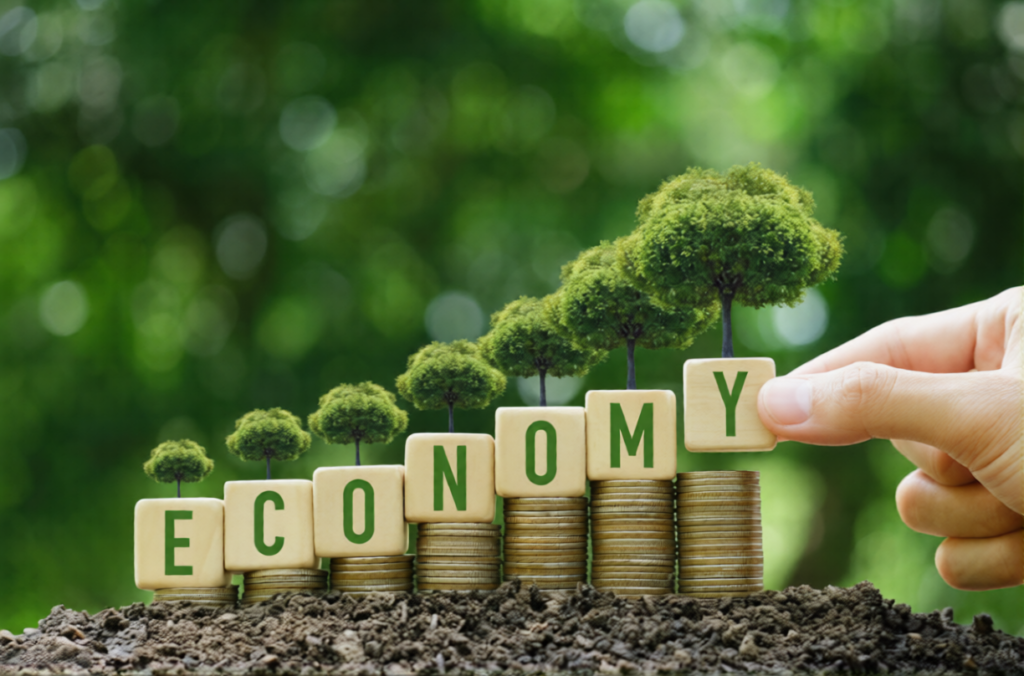
Carbon markets are not inherently flawed.
But their long-term legitimacy depends on stronger design.
This requires:
- Tighter verification methodologies
- Transparent reporting frameworks
- Stronger additionality standards
- Reduced over-crediting risk
- Clear hierarchy: reduce first, offset second
At SustainabilityUnscripted, we believe carbon markets must evolve from growth-focused markets to integrity-focused systems.
Because scale without trust is fragile.
A Strategic Warning
The carbon market sits at a critical moment.
If reforms accelerate:
- Trust can be rebuilt
- Market credibility can strengthen
- Climate utility can improve
But if integrity gaps remain unresolved, the risk grows.
Not necessarily of total collapse—
But of gradual credibility erosion.
And in sustainability, trust is infrastructure.
Once weakened, rebuilding is expensive.
Final Reflection
Carbon markets were built to accelerate climate action.
But any tool that grows faster than its governance eventually attracts instability.
The question is not whether carbon credits should exist.
The real question is:
Can carbon markets mature fast enough to justify the trust placed in them?
Through SustainabilityUnscripted, we will continue examining the systems shaping sustainability beyond surface narratives.
Through CleanCyclers, we will continue building measurable environmental systems rooted in operational reality.
Through the Global Sustainability Summit, we will continue convening leaders willing to challenge not only climate problems—but climate assumptions.
And through voices like CanonOtto, we remain committed to one principle:
Sustainability cannot be built on inflated claims.
Because in the end, climate progress is not measured by credits traded—
But by emissions truly reduced.