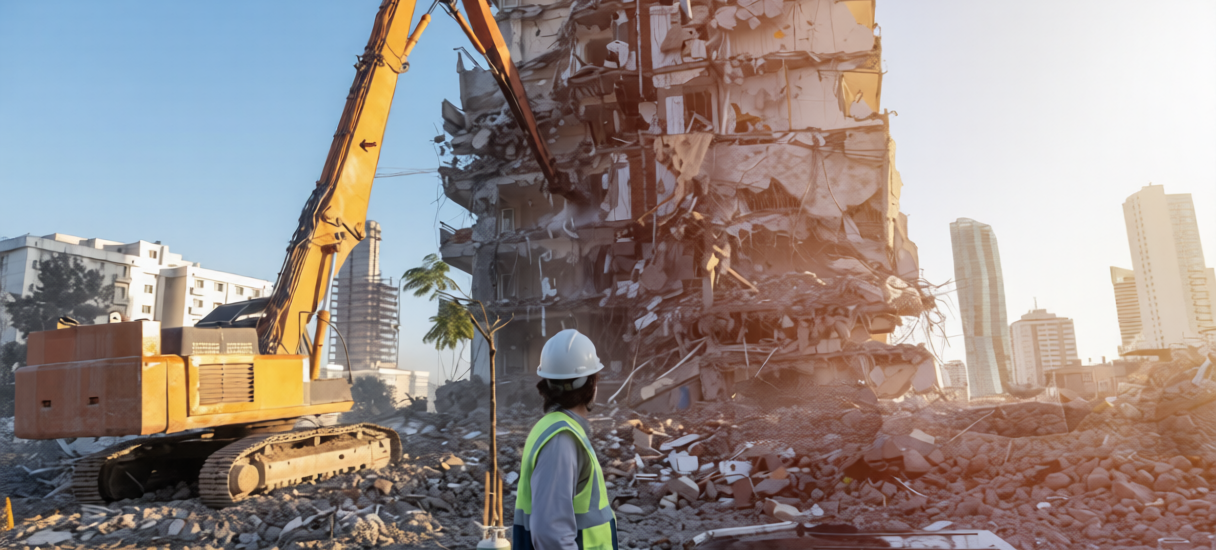
By Amb. Canon Otto | SustainabilityUnscripted
Cities are often measured by what they build.
Skylines.
Road networks.
Housing expansion.
Infrastructure growth.
But rarely do we measure what those same cities leave behind.
At SustainabilityUnscripted, we believe this omission is no longer sustainable.
Because behind every rapidly growing city lies a less visible, less discussed reality:
Construction and demolition waste is becoming one of the fastest-growing urban waste streams in the world.
And it is largely unmanaged.
The Invisible Byproduct of Urban Growth
Urban development is accelerating across many regions, particularly in developing economies and fast-growing cities.
This expansion brings:
- New buildings
- Road reconstruction
- Infrastructure upgrades
- Real estate redevelopment
But every structure built or demolished produces waste:
- Concrete
- Steel
- Wood
- Glass
- Mixed rubble
- Contaminated materials
Unlike household waste, construction debris is heavy, bulky, and often complex to process.
Yet it rarely receives proportional policy attention.
At SustainabilityUnscripted, we refer to this as:
The invisible waste of visible development.
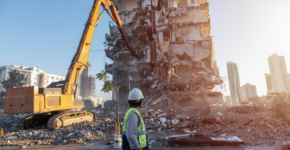
Demolition: The Hidden Multiplier
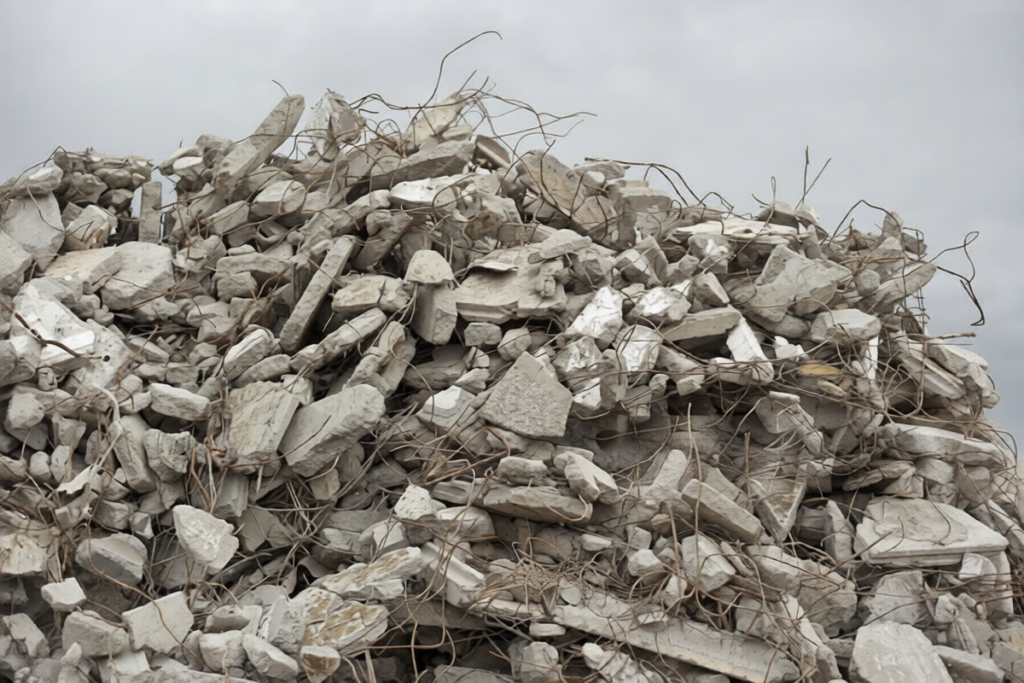
The largest contributor to construction waste is not new development.
It is demolition.
As cities modernize:
- Old buildings are torn down
- Informal structures are replaced
- Infrastructure is reconfigured
- Urban land is repurposed
Each demolition event generates large volumes of mixed waste.
Often:
- Unsorted
- Unsegregated
- Poorly managed
In many cases, demolition waste is simply:
- Transported to dumpsites
- Used as uncontrolled landfill fill
- Disposed of illegally in peri-urban zones
This creates a cascading environmental burden.
Why Construction Waste Is So Difficult to Manage
Unlike single-stream waste systems, construction debris presents structural challenges:
1. Material Complexity
Construction waste is not uniform. It includes multiple materials combined into single structures, making separation difficult.
2. Contamination
Materials are often mixed with:
- Paint
- Chemicals
- Adhesives
- Hazardous residues
3. Logistics Cost
Transporting heavy debris is expensive and energy-intensive.
4. Lack of Sorting Infrastructure
Many cities lack dedicated facilities for construction material recovery.
At SustainabilityUnscripted, we emphasize:
A waste stream that is not designed for recovery will default to disposal.
The Urban Expansion Paradox
Cities are expanding to create economic opportunity.
But expansion itself generates:
- Waste accumulation
- Resource depletion
- Land pressure
This creates a paradox:
The faster cities grow, the faster they generate unmanaged waste.
Without structured intervention, construction waste becomes a permanent shadow of urbanization.
The Recycling Gap in Construction Waste
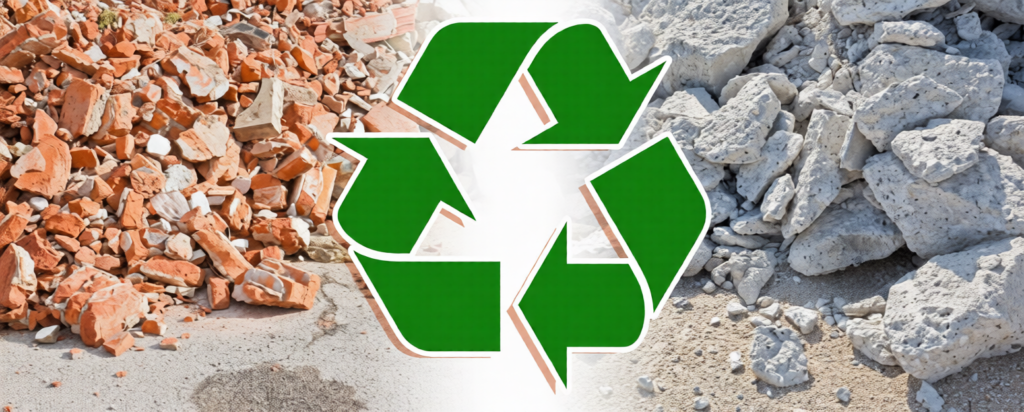
Construction waste has high potential for reuse and recycling.
Materials like:
- Concrete can be crushed and reused
- Steel can be recycled repeatedly
- Wood can be repurposed or processed
But despite this potential, recovery rates remain low in many regions.
Why?
Because recycling systems are not designed at the scale or specificity required for construction waste streams.
At SustainabilityUnscripted, this is a key systems failure:
We have recyclable materials—but not scalable recovery infrastructure.
Where CleanCyclers Becomes Critical
This is where organizations like CleanCyclers become essential to the future of urban sustainability.
Because construction waste cannot be solved by disposal—it must be systematically re-engineered.
At CleanCyclers, the focus includes:
- Structured waste recovery systems
- Segregation at source and site level
- Material mapping for reuse pathways
- Integration of construction waste into circular material flows
The goal is not just removal of debris.
It is recovery of value from urban transformation.
Because every demolished structure contains embedded resources.
And those resources should not be lost to uncontrolled dumping.
The Environmental Impact of Ignoring Construction Waste
When construction waste is poorly managed, the consequences extend beyond aesthetics.
They include:
- Land degradation
- Illegal dumping in wetlands and open land
- Air pollution from burning debris
- Blocked drainage systems contributing to flooding
- Increased pressure on landfill sites
At the Global Sustainability Summit, this issue is increasingly recognized as a critical urban systems blind spot.
Because it is not a minor waste category.
It is a structural one.
Informality and Weak Regulation
In many cities, construction waste management exists in a fragmented ecosystem:
- Contractors manage disposal independently
- Informal transporters handle debris movement
- Dumping occurs in unregulated zones
- Enforcement is inconsistent or absent
This fragmentation creates opportunities for inefficiency and environmental harm.
At SustainabilityUnscripted, we identify this as a governance gap:
When responsibility is diffuse, accountability disappears.
From Waste Stream to Material System

The future of construction waste must shift fundamentally.
From:
- Debris disposal → Material recovery systems
- Linear demolition → Circular deconstruction
- Waste dumping → Resource reintegration
This requires rethinking construction itself:
- Design for disassembly
- Material traceability
- Pre-demolition recovery planning
- Recycling integration in building codes
Construction waste should not be treated as an endpoint.
It should be treated as a resource phase within the urban lifecycle.
The Role of Urban Policy and Design
Governments and city planners must integrate construction waste into urban sustainability frameworks.
This includes:
- Dedicated construction waste facilities
- Incentives for material recovery
- Regulation of demolition practices
- Mandatory waste reporting for large projects
Without policy alignment, recovery remains fragmented and informal.
At SustainabilityUnscripted, we emphasize:
Urban sustainability cannot ignore what urbanization produces.
Final Reflection
Cities are not defined only by what they build.
They are defined equally by what they discard.
Construction waste is one of the clearest expressions of modern urban growth—and one of the least addressed.
Through SustainabilityUnscripted, we continue to highlight the systems hidden beneath visible development.
Through CleanCyclers, we continue to build frameworks that transform demolition waste into recoverable value.
Through the Global Sustainability Summit, we continue to elevate conversations that move from awareness to implementation.
And through voices like CanonOtto, we remain committed to one principle:
Sustainable cities are not only built well—they are also dismantled intelligently.
Because the future of urban sustainability will not be defined by how much we construct—
But by how responsibly we manage what construction leaves behind.