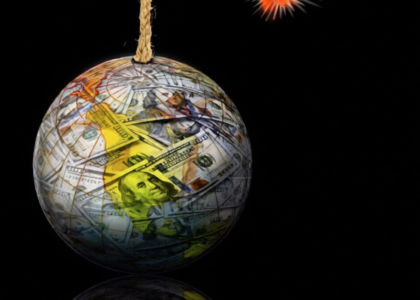
By Amb. Canon Otto | SustainabilityUnscripted
“Net zero” has become one of the most powerful phrases in the global sustainability conversation.
Governments announce it.
Corporations commit to it.
Industries align around it.
It signals ambition. Responsibility. Progress.
But at SustainabilityUnscripted, we ask a different question:
Does net zero represent real climate action—or a refined system of accounting?
The Rise of a Global Narrative
Net-zero commitments have rapidly become the benchmark for climate leadership.
The premise appears straightforward:
Reduce emissions as much as possible, and balance the remainder through offsets or removals.
On paper, it is elegant.
In practice, it is far more complex—and often far less effective.
Because what net zero promises in language, it does not always deliver in physical emissions reduction.
The Accounting Advantage
At its core, net zero is not just an environmental framework.
It is an accounting framework.
Organizations measure:
- Emissions produced
- Emissions reduced
- Emissions offset
And then present a balanced outcome.
But here lies the problem:
The atmosphere does not respond to accounting—it responds to actual emissions.
At SustainabilityUnscripted, we are seeing a growing divergence between:
- Reported climate performance
- Real-world environmental impact
This gap is where the illusion begins.
Carbon Loopholes and Creative Compliance

The flexibility within net-zero frameworks has created room for what can only be described as creative compliance.
Common practices include:
- Heavy reliance on future offset projections
- Use of low-quality or unverifiable carbon credits
- Delayed reduction targets pushed decades ahead
In some cases, organizations achieve “net-zero status” while:
- Continuing high-emission operations
- Expanding carbon-intensive activities
- Deferring meaningful transformation
This is not climate leadership.
It is narrative management.
The Delay Problem
Perhaps the most critical flaw in the current net-zero approach is timing.
Many commitments are structured around distant deadlines—2040, 2050, or beyond.
This creates a dangerous dynamic:
Immediate action is replaced with long-term promises.
Instead of accelerating:
- Industrial redesign
- Clean energy adoption
- Operational efficiency
Net-zero frameworks can unintentionally enable delay.
At the Global Sustainability Summit, this issue is becoming increasingly clear:
The climate crisis operates on urgency—while net-zero strategies often operate on timelines.
The Optics of Sustainability
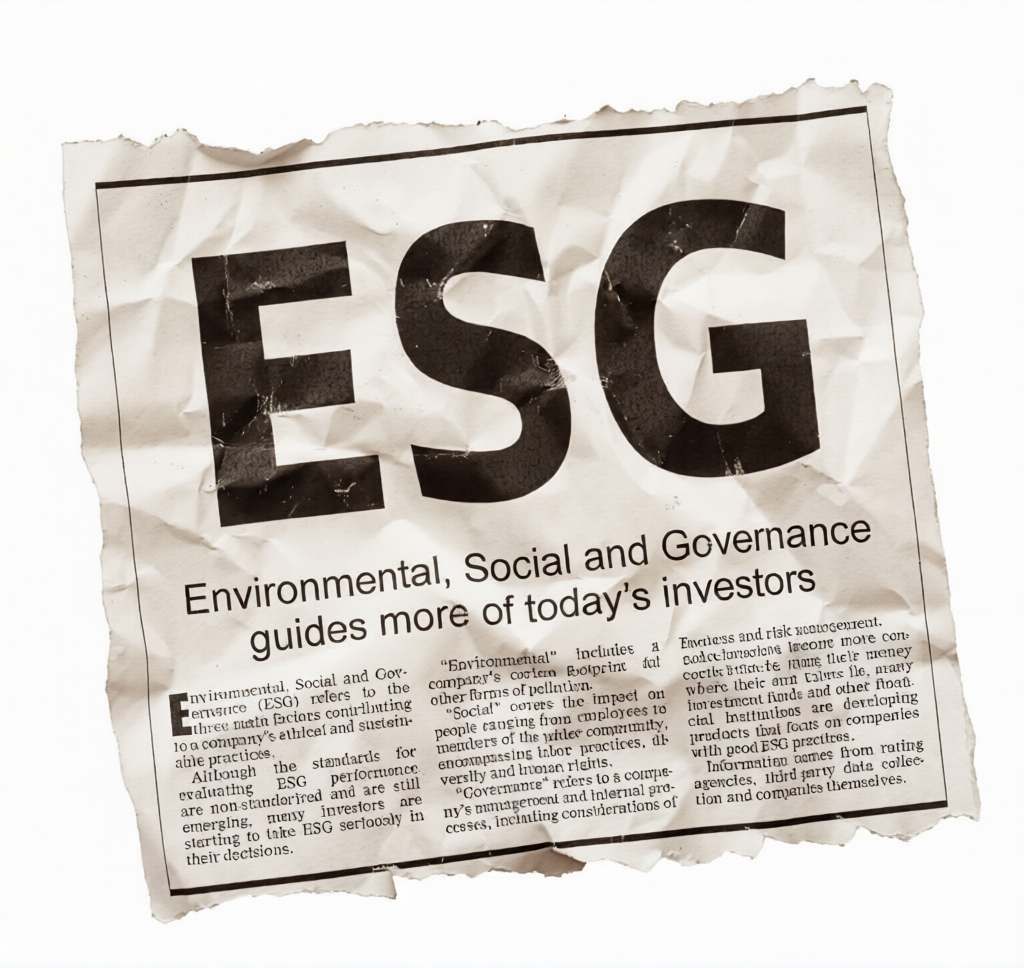
In today’s corporate landscape, sustainability is no longer optional—it is reputational.
This has led to the rise of:
- ESG reporting
- Sustainability branding
- Climate commitments as public relations tools
Net zero fits perfectly into this ecosystem.
It is measurable.
It is communicable.
It is marketable.
But the risk is this:
When sustainability becomes optics-driven, impact becomes secondary.
At SustainabilityUnscripted, we challenge this shift directly.
Because credibility in sustainability is not built on commitments.
It is built on measurable, verifiable action.
Where Real Impact Lies
If net zero is to remain relevant, it must be re-centered around reduction—not compensation.
This means:
- Cutting emissions at the source
- Redesigning production systems
- Investing in clean infrastructure
- Eliminating inefficiencies across value chains
This is where organizations like CleanCyclers play a critical role.
Because emissions are not just about energy—they are about materials, waste, and resource flow.
Every inefficient system generates waste.
Every waste stream carries embedded carbon.
Reducing waste is reducing emissions.
And that is not an accounting exercise—it is a physical outcome.
From Net Zero to Real Zero Thinking
The future of sustainability will require a shift in mindset:
From:
- Net zero → Real zero
- Offsetting → Elimination
- Reporting → Execution
This does not mean net zero should be abandoned.
It means it must be redefined.
Offsets should be limited.
Targets should be near-term.
Progress should be transparent and independently verified.
At SustainabilityUnscripted, we believe the next phase of climate leadership will not be defined by who commits the most—
But by who reduces the most, the fastest.
A Call for Systemic Accountability

At the Global Sustainability Summit, one principle continues to guide our conversations:
Sustainability must move from ambition to accountability.
This requires:
- Stronger regulatory frameworks
- Standardized reporting systems
- Clear separation between reduction and offsetting
Because without accountability, net zero risks becoming:
A promise that delays the very action it was meant to accelerate.
Final Reflection
The idea of net zero is powerful.
But power without precision is dangerous.
We must ask ourselves:
Are we building a system that reduces emissions—or one that explains them?
At SustainabilityUnscripted, we will continue to challenge frameworks that prioritize perception over performance.
Through CleanCyclers, through the Global Sustainability Summit, and through voices like CanonOtto, we are committed to a different standard:
One where sustainability is not declared—
But demonstrated.
Because in the end, the planet does not measure targets.
It measures temperature, emissions, and impact.
And those cannot be negotiated with.